

Antistatic Cleanroom Flooring: A Complete Guide to Selecting, Installing, and Maintaining ESD Flooring

When it comes to the design and construction of a cleanroom, contamination control is not the only important consideration. Static electricity can also cause damage to sensitive electronic equipment, disrupt production processes, attract particles, and, in certain environments, increase the risk of sparks and fire.
For this reason, selecting a suitable antistatic flooring system for a cleanroom should take into account electrostatic charge control, cleanability, chemical and mechanical resistance, joint sealing, and compatibility with cleanroom requirements.
In this article, Vira Pharmed, as a provider of cleanroom equipment and infrastructure, examines what antistatic flooring is, how it works, how it differs from conductive flooring, why antistatic vinyl PVC flooring is a suitable choice for many cleanrooms, how it is installed, and what factors should be considered when selecting a contractor.
What Is Antistatic Flooring?
Antistatic flooring, or ESD flooring, is an engineered flooring system designed to control and safely dissipate electrostatic charges.
In a typical environment, walking, moving equipment, friction between footwear and the floor surface, and the contact and separation of different materials can generate electrical charges. If these charges are not properly controlled, they may be suddenly released in the form of an electrostatic discharge, or ESD.
Antistatic flooring provides a controlled path for the transfer of electrical charges, preventing their uncontrolled accumulation on the surface.
An important point is that antistatic flooring alone does not constitute a complete ESD control system. The actual performance of the system also depends on factors such as footwear and personnel grounding, grounding connections, flooring resistance, environmental c

Why Is Antistatic Flooring Important in a Cleanroom?
Cleanrooms in industries such as pharmaceuticals, medical devices, electronics, sensitive industries, and certain research processes are designed to control contamination.
In such environments, the floor is not merely a surface for walking; it is part of the contamination control and environmental control system.
A suitable cleanroom flooring system should be able to:
- Be easily cleaned and disinfected.
- Provide a seamless surface with as few joints as possible.
- Resist cleaning agents and chemicals appropriate to the process.
- Withstand frequent traffic and cleaning without rapid deterioration.
- Control the accumulation of electrostatic charges.
- Allow for appropriate hygienic detailing at floor-to-wall connections.
- Comply with the project’s requirements and cleanroom classification.
In environments where electronic equipment or sensitive components are present, ESD control becomes even more important, as an uncontrolled electrostatic discharge can damage sensitive components, even in cases where the resulting damage is not immediately visible.
What Is Antistatic Vinyl PVC Flooring?
Antistatic vinyl PVC flooring is one of the commonly used options for controlled environments and cleanrooms.
These flooring systems are manufactured in rolls or tiles and, depending on the product type and system design, are engineered with specialized materials and structures to provide controlled electrical properties.
In an ESD flooring system, the flooring must be connected to a discharge path and grounding system so that the electrical charge generated on the surface can be safely dissipated in a controlled manner.
For this reason, the quality of the flooring itself is only one of the determining factors. Conductive adhesive, copper tape or copper grid, grounding connections, subfloor preparation, and the quality of joint installation also play an important role in the final performance of the system.
What Is the Difference Between Antistatic and Conductive Flooring?
One common mistake when selecting ESD flooring is to treat the terms “antistatic,” “dissipative,” and “conductive” as equivalent without considering their technical specifications.
In practice, ESD flooring systems are classified according to their electrical resistance range and intended application.
Ant
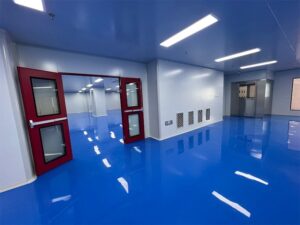
Benefits of Antistatic PVC Flooring for Cleanrooms
The selection of suitable cleanroom flooring should be based on a combination of technical performance requirements. Antistatic PVC vinyl flooring can offer several benefits when used in appropriate cleanroom applications.
1. Electrostatic Control
The primary benefit of ESD flooring is that it provides a controlled path for the dissipation of electrostatic charges.
This feature is particularly important in environments containing electronic equipment, sensitive components, or processes that are susceptible to ESD.
2. Easy Cleaning and Washing
Cleanroom flooring should have a surface that can be regularly cleaned and disinfected.
Suitable vinyl flooring provides a relatively uniform, washable surface and, with the proper selection of cleaning agents, can be used as part of regular cleaning programs.
3. Reduction of Contamination Accumulation Points
One of the important considerations when installing cleanroom flooring is proper attention to joints and the connection between the floor and walls.
Proper joint installation and the use of suitable details, such as hygienic coves and upturns, can help prevent areas that are difficult to clean.
4. Suitable Resistance to Traffic
Depending on their application, cleanrooms may need to withstand pedestrian traffic, equipment wheels, trolleys, and other mobile equipment.
Therefore, flooring should be selected based on the actual traffic level of the project rather than solely on the price per square meter.
5. Potential for a More Integrated Flooring System
One of the key advantages of vinyl flooring is the ability to properly execute joints and connection details.
In critical projects, the quality of joint installation can sometimes be just as important as the selection of the flooring itself.
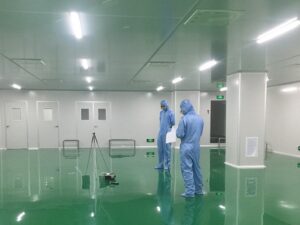
Where Is Antistatic Flooring Used?
The application of ESD flooring is not limited to a specific industry.
Pharmaceutical Cleanrooms
In pharmaceutical production lines, raw material handling areas, packaging processes, and controlled environments, the flooring must not only provide electrostatic charge control but also meet the project’s hygiene and cleaning requirements.
Medical Device Manufacturing
In medical device manufacturing environments, contamination control and the provision of a washable surface are highly important.
Electronics Industry
Electronic components are sensitive to electrostatic discharge. Therefore, ESD control is particularly important in assembly lines, laboratories, and electronics manufacturing environments.
Cleanrooms and Laboratories
In laboratories and research facilities, the type of flooring should be selected according to the work processes, chemicals used, and required level of contamination control.
Equipment Rooms and Sensitive Areas
In environments containing sensitive electronic equipment, the use of an appropriate electrostatic control system may be part of the design requirements.
What Are the Components of an ESD Flooring System?
A professional antistatic flooring system is more than simply a layer of PVC installed over concrete.
Depending on the selected system, its main components may include:
- Proper Subfloor Preparation
- Primer or Preparatory Layer, if Required
- Copper Tape or Copper Grid
- Conductive Adhesive
- Antistatic PVC Vinyl Flooring
- Connection of the System to Ground
- Proper Joint Installation
- Hygienic Cove and Upturn, if Required by the Project
The final performance of the system depends on the proper coordination and integration of all these components.
How Is Antistatic PVC Flooring Installed?
Antistatic cleanroom flooring should be installed by a team experienced in both vinyl flooring systems and the requirements of controlled environments.
Stage One: Subfloor Inspection and Preparation
The substrate should be inspected for factors such as:
- Levelness
- Strength
- Moisture
- Contamination
- Cracks
- Grease
- Dust
- Surface irregularities
If the substrate is not properly prepared, even the highest-quality flooring may not deliver the desired performance.
Stage Two: Preparation of the Grounding Connection Path
In ESD systems, the charge dissipation path must be established in accordance with the system design.
This stage may include installing copper tape or a copper grid and properly connecting it to the grounding system.
The layout and number of grounding connection points should not be determined empirically or based on a fixed arrangement for every project. Instead, they should be defined according to the product specifications, space dimensions, ESD system design, and project requirements.
Stage Three: Application of Conductive Adhesive
A suitable ESD adhesive is used to establish proper electrical continuity between the flooring and the conductive system.
The use of an unsuitable adhesive or improper application can affect the electrical performance of the system.
Stage Four: Installation of PVC Flooring
After the substrate and adhesive have been properly prepared, the flooring is carefully installed.
At this stage, attention should be paid to factors such as alignment, prevention of air bubbles, avoidance of wrinkles, and proper adhesion.
Stage Five: Joint Installation
In cleanroom projects, flooring joints are highly important.
Open joints or poor-quality joint installation can make cleaning more difficult and create areas where contamination can accumulate.
Therefore, where required by the project, joints should be installed and sealed using an appropriate method in accordance with the system specifications.
Stage Six: Installation of Hygienic Coving and Upturns
In many cleanrooms, the floor-to-wall connection should be designed to minimize sharp corners and areas that are difficult to clean.
The installation of a hygienic cove or Cove can be an appropriate solution for achieving this type of detail.
Stage Seven: Final Testing and Inspection
Once the flooring has been installed, visual inspection alone is not sufficient for project handover.
The performance of the ESD system should be tested and documented based on the project requirements and the specified test methods.
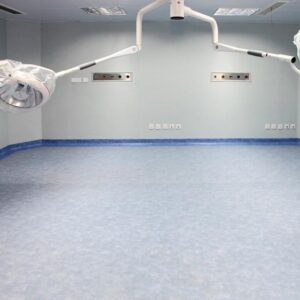
What Is the Standard for Antistatic Flooring?
One of the most important considerations when purchasing ESD flooring is not to rely solely on the term “antistatic” used in a catalog or advertisement.
Standards related to electrostatic control provide various methods for evaluating the electrical properties, resistance, and performance of ESD flooring systems.
Among the well-known standards in this field is the IEC 61340 series of standards.
However, an important point is that the applicable standard should be selected based on the type of project and the client’s requirements.
For example, the requirements of an electronic component manufacturing line are not necessarily the same as those of a pharmaceutical cleanroom.
Therefore, before selecting the flooring, the following factors should be clearly determined:
- What is the intended use of the room?
- What type of equipment will be installed in the area?
- How sensitive is the process to ESD?
- What level of electrical resistance is required?
- What are the cleaning and disinfection requirements?
- Which chemicals will come into contact with the flooring?
- What is the level of personnel and equipment traffic?
- Which standards are mandatory for the project?
What Should the Electrical Resistance of Antistatic Flooring Be?
There is no single fixed resistance value that can be applied to every project.
The appropriate resistance range depends on the type of ESD system, applicable reference standard, flooring type, grounding method, and intended application.
Therefore, selecting flooring based solely on terms such as “very high resistance” or “fully conductive” is not a technically appropriate approach.
The actual product specifications and test results should be evaluated against the requirements of the project.
It should also be noted that resistance measured under laboratory conditions does not necessarily indicate that the system will perform in the same way at the project site. Factors such as humidity, surface contamination, footwear, adhesive, subfloor preparation, and the grounding system can also affect performance.
Does Antistatic Flooring Alone Prevent ESD?
No.
This is one of the most important considerations when designing an electrostatic control system.
Effective ESD control requires a combination of factors working together, including:
Suitable flooring + proper grounding + appropriate footwear or personnel equipment + proper work practices + environmental control + periodic testing and maintenance
Therefore, if ESD flooring is installed but the grounding connection is not properly established, or personnel use unsuitable footwear, the expected performance of the system may not be achieved.
What Factors Can Reduce the Performance of ESD Flooring?
Even a high-quality flooring system may lose its initial performance if it is not properly maintained.
Key factors include:
Surface Contamination
The accumulation of grease, dust, and other materials can alter the surface properties of the flooring.
Use of Inappropriate Cleaning Agents
Certain chemicals or unsuitable polishes may affect the surface properties of the flooring.
Damage to or Disconnection of the Grounding Path
Damage to the copper grid or its connections can disrupt the performance of the entire system.
Flooring Wear and Deterioration
Heavy traffic, dragging equipment, and impact can damage the flooring surface or its joints.
Poor Installation
Even the highest-quality product cannot deliver optimal performance if it is improperly installed.
How Should Antistatic Flooring Be Maintained?
Proper maintenance helps extend the service life of the flooring and preserve its performance.
To achieve this:
- Establish a regular cleaning schedule.
- Use cleaning agents compatible with the flooring.
- Prevent scratches and mechanical damage.
- Do not drag heavy equipment across the floor.
- Inspect any damage to the joints promptly.
- Check ESD system connections as part of periodic maintenance programs.
- Perform the electrical tests required for the project at specified intervals.
In sensitive environments, floor cleaning is not merely a matter of appearance; it is an integral part of contamination control and maintaining proper environmental performance.
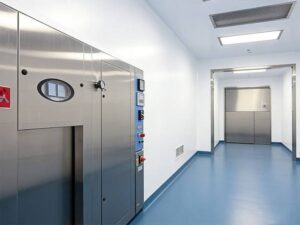
How Much Does Antistatic Flooring Cost?
The price of antistatic cleanroom flooring cannot be determined solely based on the price per square meter of the flooring material.
The final project cost depends on various factors, including:
- Project area
- Type and brand of PVC flooring
- Roll or tile format
- Subfloor condition
- Required level of surface preparation
- Type of grounding system
- Amount of copper tape or copper grid
- Type of adhesive
- Number of joints
- Installation of coves and upturns
- Project site conditions
- Level of traffic
- Project hygiene and environmental control requirements
For this reason, a lower product price does not necessarily mean a lower overall project cost.
For a meaningful comparison, the cost should be evaluated as a complete system, including the flooring material, subfloor preparation, ESD grounding, installation, joints, and final detailing.
What Should You Consider When Choosing an Antistatic Flooring Contractor?
Selecting the installer is just as important as selecting the flooring itself in cleanroom projects.
Before signing a contract, consider the following:
1. Relevant Project Experience
Ask the contractor to provide examples of completed projects, particularly cleanroom flooring projects.
2. Product Datasheet
The technical specifications of the flooring should be available for review and verification.
3. ESD Installation Method
The contractor should be able to clearly explain how the flooring system will be connected to the grounding system.
4. Testing Method
It should be clear how the performance of the system will be tested and documented after installation.
5. Floor-to-Wall Connection Details
In a cleanroom, simply installing the flooring is not sufficient. Cove, upturn, and sealing details are also important.
6. Experience in Controlled Environments
Flooring installation in a conventional industrial environment is not the same as flooring installation in a cleanroom.
Why Choose Vira Pharmed for Cleanroom Flooring Installation?
In a cleanroom project, flooring should be considered as part of the overall environment rather than as an isolated product.
Vira Pharmed focuses on cleanroom equipment and infrastructure and provides antistatic PVC vinyl flooring installation services for controlled environments.
During project execution, factors such as subfloor preparation, grounding connection details, flooring installation, joint treatment, and floor-to-wall connection details should be evaluated according to the specific project requirements.
If you are looking for antistatic flooring installation for a pharmaceutical, medical, electronics, or laboratory project, it is better to assess the specifications of the space before selecting the product so that the appropriate flooring system can be recommended based on the actual application.
Get Consultation for Antistatic Cleanroom Flooring Installation
If you have the project area, room application, and project specifications available, you can provide the project information to Vira Pharmed so that the appropriate antistatic PVC vinyl flooring option and installation details can be evaluated.
For consultation and a quotation for antistatic cleanroom flooring installation, contact the Vira Pharmed specialists.
Frequently Asked Questions About Antistatic Flooring
What Is Antistatic Flooring?
Antistatic flooring is a flooring system with controlled electrical properties, designed to reduce the accumulation of electrostatic charges and provide a controlled path for their dissipation.
What Is the Best Antistatic Flooring for a Cleanroom?
The most suitable option depends on the room application, required level of contamination control, traffic level, chemicals used, ESD requirements, and project specifications. Antistatic PVC vinyl flooring is a common option for many controlled environments.
Can PVC Flooring Be Antistatic?
Yes. Certain PVC vinyl flooring products are manufactured with specialized materials and structures designed to control electrostatic charges and can be used as part of a suitable ESD system.
Does Antistatic Flooring Need to Be Grounded?
In an ESD system designed to safely dissipate electrostatic charges to ground, the grounding path is an important part of the system design. The grounding method should be implemented in accordance with the flooring specifications, system design, and project requirements.
What Is the Difference Between Antistatic and Conventional Flooring?
ESD flooring has controlled electrical properties that allow electrostatic charges to be controlled and dissipated, whereas conventional flooring does not necessarily provide this functionality.
Is Antistatic Flooring Suitable for Pharmaceutical Cleanrooms?
When the appropriate product is selected and properly installed, antistatic PVC vinyl flooring can be suitable for certain pharmaceutical environments and cleanrooms. The final selection should be based on hygiene requirements, manufacturing processes, cleaning agents, and applicable project standards.
Is Antistatic Flooring Priced Per Square Meter?
The flooring material is generally priced based on area; however, the final installation cost also includes subfloor preparation, adhesive, grounding system, joints, coves, and other installation details.
How Long Does Antistatic PVC Flooring Last?
Its service life depends on product quality, subfloor preparation, installation quality, traffic level, environmental conditions, and maintenance practices. Therefore, a single fixed service-life figure cannot be specified for all projects.
Conclusion
Antistatic flooring is an important component in the design of many environments that are sensitive to electrostatic charges. However, flooring should not be selected solely based on price or the label “ESD.”
For a successful project, a range of factors—including PVC flooring type, electrical specifications, subfloor preparation, adhesive, grounding system, joint installation, hygienic coves, cleaning procedures, and final testing—should be evaluated together.
For cleanrooms, this becomes even more important because the flooring must meet not only ESD control requirements but also requirements related to cleaning, contamination control, mechanical resistance, and process conditions.
Vira Pharmed provides antistatic PVC flooring installation services for cleanrooms and can evaluate and implement the flooring system according to the specific application and technical requirements of each project.


