


What Is a Cleanroom Interlock? How It Works, Types, Components, and Applications
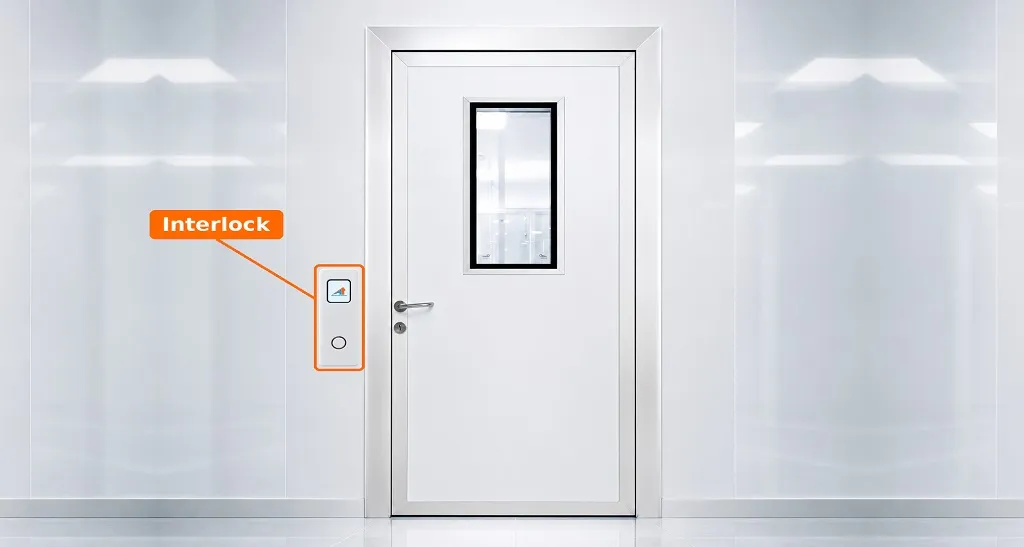
In controlled environments such as cleanrooms, maintaining air quality, controlling airborne particles, and preventing contamination transfer between different areas are essential. To learn more about the characteristics and requirements of these environments, you can explore the concept of cleanrooms and how they operate.
One of the key factors in maintaining cleanroom conditions is properly managing the movement of personnel and materials. A Cleanroom Interlock is a system that controls the opening and closing of doors, preventing designated doors from being opened simultaneously and helping maintain the required environmental conditions within the cleanroom.
In many industries, including pharmaceuticals, healthcare, laboratories, food processing, and electronics, the simultaneous opening of doors between two adjacent areas can disrupt airflow and lead to contamination transfer. By managing door status, an interlock system helps reduce the risk of such occurrences.
In this article, we will explore the concept of cleanroom interlocks, how they work, their different types, main components, applications, and important considerations for their design and use.
Why Is an Interlock System Important in a Cleanroom?
In a cleanroom, opening doors is not merely a matter of access and movement. It can also affect air pressure, airflow direction, and the level of environmental contamination.
The main reasons for using an interlock system include:
- Preventing cross-contamination: Reducing the possibility of transferring particles and contaminants between areas with different cleanliness classifications.
- Helping maintain pressure differentials: Preventing simultaneous opening of access routes that could disrupt the designed pressure conditions.
- Managing traffic: Controlling the entry and exit of personnel and equipment through designated routes.
- Improving safety: Enabling the use of warning devices to notify users of abnormal door conditions.
- Integration with control equipment: Allowing communication with building management systems and safety equipment, depending on the project design.
However, the proper operation of an interlock system alone does not guarantee environmental cleanliness. It must be used alongside appropriate HVAC system design, filtration, pressure control, and operating procedures.
How Does a Cleanroom Interlock System Work?
An interlock system operates by receiving door status signals and issuing control commands.
In a typical system, a door status sensor or contact informs the controller whether a door is open or closed. The controller checks the status of the other doors and determines whether the requested door can be opened.
For example, in a space with two doors:
- A person opens the first door.
- The system detects that the door is open.
- As long as the first door remains open, the second door stays locked.
- Once the first door is closed and its status is confirmed, the second door can be opened.
- If an abnormal condition occurs, the system can activate an appropriate warning.
In more advanced systems, door status information is also transmitted to other control equipment, enabling integrated monitoring and management.
The Role of Door Status Sensors in Interlock Operation
A door status sensor or contact is one of the key components of the system. It detects whether a door is open or closed and sends this information to the controller.
If the door status is not detected correctly, the system’s control logic may also be disrupted. Therefore, selecting and installing the appropriate sensors and checking their operation during commissioning are essential.
The Role of Audible and Visual Alarms
Some interlock systems use audible alarms and warning lights to notify users of abnormal conditions.
For example, if a door remains open longer than a predefined period or a specific condition occurs during access, an audible or visual warning can alert the operator.
In cleanroom projects, these devices help users better identify door status and take appropriate action when necessary.
Types of Cleanroom Interlock Systems
Interlock systems can be classified into several groups based on their locking mechanism, control method, and implementation structure.
1. Mechanical Interlock
In this type of system, a mechanical connection between the doors ensures that opening one door prevents the other door from opening.
Features:
- Relatively simple structure
- No direct dependence on an electronic controller
- Suitable for certain simple and limited access routes
- Limited alarm and monitoring capabilities
2. Electromagnetic Interlock
This system uses electromagnetic locks to control door access. After receiving sensor information, the controller issues commands to lock or release the doors.
Features:
- Electronic door control
- Compatibility with door status sensors
- Ability to define different control logics
- Expandability for connection to auxiliary equipment, depending on the system design
3. Smart Electronic Interlock
This type of system uses a controller, control inputs, and outputs to manage multiple doors and communicate with other systems.
For projects requiring integration with BMS, fire alarm systems, or access control systems, selecting a system with suitable communication outputs is important.
4. Pneumatic Interlock
In this type of system, part of the door locking or unlocking process is carried out using air pressure and pneumatic equipment. Selecting this method depends on project conditions, door type, and operational requirements.
Main Components of a Cleanroom Interlock System
Depending on the number of doors and the features required for a project, a cleanroom interlock system may consist of various components.
Central Controller
The controller is the main part of the system. It receives door status information, executes the control logic, and sends commands to locking and alarm devices.
Door Status Sensor or Contact
These devices inform the controller whether a door is open or closed. Selecting and installing them correctly is essential for proper system operation.
Electromagnetic or Electric Lock
Locks manage door access based on commands received from the controller. The type of lock must be compatible with the door conditions and the project’s safety requirements.
Exit Push Buttons and Emergency Equipment
These devices are used to provide an exit option under predefined emergency conditions. Their design must comply with safety and emergency evacuation requirements.
Audible and Visual Alarms
These devices provide notifications about specific conditions, such as a door being left open or an alarm being activated.
Communication Outputs
Communication outputs are important in projects that require data exchange with other systems.
For example, integration with a BMS can make it possible to monitor door status and alarms through a central system. The type of information that can be transmitted depends on the system’s communication protocol and structure.
What Is the Difference Between a Cleanroom Interlock and an Access Control System?
These two systems may be used together in the same project, but they do not perform the same functions.
An access control system determines who is permitted to enter, when they can enter, and which route they can use. In contrast, an interlock system focuses on door status and preventing designated doors from being opened simultaneously.
For example, a person may have permission to enter a cleanroom, but the interlock system will not allow the next door to open until the previous door has been closed.
In advanced projects, combining these two systems can provide more integrated access control and environmental management.
Integration of Interlock Systems with BMS and Monitoring Systems
In large cleanroom projects, information from different equipment and systems must be available within a centralized control structure. A BMS (Building Management System) is used to monitor and manage building equipment.
Connecting an interlock system to a BMS can make it possible to receive information such as door status and alarm conditions. However, the information that can be exchanged depends on the output type, communication protocol, and system configuration.
Some systems use the Modbus RS485 protocol or digital outputs to exchange information with control equipment.
The following points should be considered during the design stage:
- The communication protocol required by the BMS
- The number of input and output points
- The type of information that must be sent to the monitoring system
- How alarms should be displayed
- Compatibility between control devices
These considerations help ensure that the interlock system can communicate with other equipment without disrupting the project’s overall control structure.
Integration of Interlock Systems with Fire Alarm Systems
One of the important considerations in cleanroom interlock design is how the system operates during emergency situations.
Under normal conditions, the system prevents doors from being opened simultaneously. However, during a fire alarm, safe evacuation must be possible. Therefore, connecting the interlock system to the fire alarm system and defining an emergency operating scenario are important.
The method of releasing locks and operating doors must be determined according to safety requirements, the type of lock, and the design of the evacuation routes. The primary priority in these situations is ensuring safe evacuation.
What Are the Applications of Interlocks in PAL and MAL?
Cleanrooms generally use intermediate spaces to manage the entry and exit of personnel and materials. These spaces can be divided into two main categories:
PAL: Personnel Airlock
A Personnel Airlock (PAL) is an intermediate space used for personnel entry and exit. It allows personnel to complete the required procedures, such as changing clothes and following hygiene requirements, before entering the clean environment.
An interlock system in a PAL prevents the inlet and outlet doors from being opened simultaneously, helping maintain environmental conditions.
MAL: Material Airlock
A Material Airlock (MAL) is used to transfer materials, equipment, and products into or out of a cleanroom.
Controlling door opening and closing is also important in MALs because material transfer can be one of the routes through which contamination enters the environment.
The Role of Interlocks in Maintaining Cleanroom Pressure Differentials
In many cleanrooms, a specific pressure differential is established to regulate airflow between different areas.
Positive-pressure rooms maintain a higher internal air pressure than adjacent spaces, helping prevent contaminated air from entering. By contrast, negative-pressure areas are designed to contain contaminants and prevent them from escaping into surrounding environments.
Simultaneous door opening can change the airflow path and disrupt the designed pressure conditions.
By preventing designated doors from opening simultaneously, an interlock system helps maintain pressure conditions. However, accurate pressure control still depends on the proper design and operation of the HVAC system and pressure monitoring equipment.
Standards Related to Cleanroom Interlock Systems
An interlock system does not independently establish a cleanliness classification or constitute a separate standard. However, its design and operation must be consistent with the overall requirements of the cleanroom project.
Some of the important related standards and guidelines include:
ISO 14644 Standard
The ISO 14644 standard addresses the classification and control of air cleanliness in cleanrooms. The design of entry and exit routes, airflow control, and contamination management must be consistent with the requirements of the intended cleanliness classification.
EU GMP Annex 1
This guideline is particularly important for the manufacture of sterile pharmaceutical products. It addresses topics such as cleanroom design, contamination control, material and personnel flows, and airlock management.
WHO Guidelines
World Health Organization guidelines in the fields of pharmaceutical manufacturing and contamination control can also be used in the design and operation of controlled environments.
It is important to note that simply installing an interlock system does not mean that a cleanroom fully complies with the above standards. Compliance must be assessed at the project level by reviewing all relevant technical requirements and documentation.
Cleanroom Classifications and Their Impact on Interlock Design
Cleanrooms are classified according to the permitted concentration of airborne particles. Different industries may use ISO classifications or pharmaceutical grade classifications.
In sterile pharmaceutical environments, Grades A, B, C, and D are used. The ISO 14644 standard also defines different classes for air cleanliness classification.
When designing an interlock system, factors such as the cleanliness classification of adjacent areas, the number of entry and exit routes, the number of doors, and pressure requirements must be considered.
Therefore, the number of doors and the interlock control logic must be selected according to the architectural layout and the requirements of the manufacturing process.
What Is the Difference Between an Interlock and an Airlock?
An airlock is an intermediate space between two environments designed to control contamination transfer, airflow, and movement.
An interlock is a control mechanism or system that manages the simultaneous opening of designated doors.
In simple terms, an airlock is a physical space, whereas an interlock is a control system used to manage the doors within that space. These two are commonly used together in cleanroom projects.
Important Considerations When Designing and Selecting an Interlock System
To select and design a suitable interlock system, the project requirements must first be identified. An incorrect selection may cause movement disruptions, improper door operation, or difficulties during operation.
The most important factors to consider include:
- Number of doors: Determine how many doors must be controlled by a single system.
- Door type: Evaluate the door type, dimensions, opening method, and required lock type.
- Cleanliness classification of areas: Determine the cleanliness level of adjacent environments and process requirements.
- Pressure differential: Assess the positive or negative pressure conditions and their relationship with the HVAC system.
- Control type: Define the door operating logic and the conditions under which doors are permitted to open.
- Alarm equipment: Determine whether audible alarms, warning lights, and notifications for abnormal conditions are required.
- Integration with other equipment: Evaluate the need for connections to BMS, Fire Alarm, and access control systems.
- Communication output: Select Modbus RS485 or digital outputs according to the project’s structure.
- Emergency conditions: Define how the system should operate during fire alarms, power outages, and other critical situations.
For customized systems, these requirements should preferably be coordinated with the project’s technical team before manufacturing and installation.
Cleanroom Interlock System Installation Process
Interlock installation should be carried out in coordination with the electrical, mechanical, control, and cleanroom construction teams.
The general installation steps include:
- Reviewing the drawings and determining equipment installation locations
- Identifying cable routing paths
- Installing the controller and auxiliary equipment
- Installing door sensors and locks
- Connecting audible alarms and warning lights
- Implementing the required communication connections
- Configuring the control logic
- Testing door operation and emergency conditions
After installation, all doors and auxiliary equipment must be tested under different operating conditions.
Testing and Commissioning an Interlock System
Proper commissioning is essential because improper interlock operation may disrupt access or create unsafe conditions.
The following items can be checked during the testing process:
- Prevention of simultaneous opening of designated doors
- Correct detection of open and closed door status
- Proper operation of locks
- Correct operation of audible alarms and warning lights
- Accurate transmission of status signals through digital outputs or Modbus RS485
- Communication with the BMS, if this capability is included in the project
- System operation under the fire alarm scenario
- Equipment operation during power interruption and restoration
- Availability of safe exit under emergency conditions
In pharmaceutical and other sensitive projects, documentation and performance verification processes must be carried out according to the project’s validation requirements.
Routine Maintenance and Servicing of Interlock Systems
To maintain proper system performance, the equipment must be inspected periodically.
The main maintenance activities include:
- Checking lock operation
- Inspecting door sensors and contacts
- Checking cables and connections
- Testing audible alarms and warning lights
- Inspecting communication outputs
- Checking system operation under emergency conditions
- Inspecting the enclosure and protective coating
- Recording and following up on potential faults
The periodic maintenance schedule should be adjusted according to traffic volume, environmental conditions, and process sensitivity.
Common Mistakes in Interlock Design and Use
Some mistakes can reduce system efficiency and create safety-related problems:
- Selecting a system without considering the number and type of doors
- Ignoring pressure differences between adjacent areas
- Improper design of emergency exit scenarios
- Failing to consider integration with the fire alarm system
- Selecting a communication output that is incompatible with the BMS
- Improper installation of door status sensors
- Failing to perform complete testing after installation
- Not having a routine maintenance and servicing plan
To prevent these problems, the interlock system must be designed according to the actual project requirements and in coordination with other technical departments.
Introduction to the Cleanroom Interlock System
In cleanroom projects, the selection of an interlock system must be based on the number of doors, control type, alarm equipment, and communication requirements.
For example, some projects require integration with a BMS or fire alarm system. In other projects, the communication output type, alarm method, and customization requirements may be the main priorities.
Our cleanroom interlock system is designed with features such as audible and visual alarms, Modbus RS485 or digital outputs, the ability to connect to BMS and fire alarm systems, and a 1.5 mm galvanized steel enclosure with an electrostatic powder coating. The number of doors, output type, and control method can also be customized according to project requirements.
To learn more about the technical details and capabilities of this product, visit the Cleanroom Interlock System product page.
Conclusion
A cleanroom interlock system is an important piece of equipment for controlling access and preventing designated doors from opening simultaneously in clean environments. By managing access, this system helps maintain pressure differentials and reduce the possibility of contamination transfer between areas.
When designing and selecting an interlock system, factors such as the number of doors, lock type, warning devices, communication outputs, integration capabilities with BMS and fire alarm systems, and emergency conditions are particularly important.
Understanding how this system works and what its components are helps project managers, engineers, and technical specialists select an appropriate solution for controlling cleanroom doors according to the needs of the environment.
To review the capabilities of an example system suitable for cleanroom projects, you can explore the Cleanroom Interlock System.
Frequently Asked Questions About Cleanroom Interlocks
1. What Is the Main Function of a Cleanroom Interlock?
A cleanroom interlock prevents designated doors from opening simultaneously. It helps manage access, maintain pressure differentials, and reduce the possibility of contamination transfer between different areas.
2. What Is the Difference Between an Interlock and an Airlock?
An airlock is an intermediate space between two environments, whereas an interlock is a system or mechanism that controls the opening and closing of the doors within that space.
3. Can an Interlock System Be Connected to a BMS?
Yes. If suitable outputs and communication infrastructure are provided, an interlock system can be connected to a BMS. The type of information that can be exchanged depends on the protocol and system structure.
4. Can an Interlock System Be Connected to a Fire Alarm System?
Yes. Integration with a fire alarm system can be designed. The system’s operation during a fire must be determined according to the project’s safety scenario and emergency evacuation requirements.
5. Does an Interlock System Include Audible and Visual Alarms?
Depending on the system design, audible alarms and warning lights can be used to indicate an open door or abnormal conditions.
6. Does an Interlock System Control Cleanroom Pressure Differentials on Its Own?
No. An interlock helps maintain pressure conditions by managing door opening and closing. However, pressure differential control is the responsibility of the HVAC system design and operation, together with pressure monitoring equipment.
7. In Which Industries Are Interlock Systems Used?
These systems are used in pharmaceutical industries, hospitals, operating rooms, laboratories, food industries, medical equipment manufacturing, and electronics industries.
8. What Factors Should Be Considered When Designing an Interlock System?
The number of doors, lock type, cleanliness classification of the areas, pressure differentials, alarm equipment, integration with BMS and fire alarm systems, and emergency exit scenarios are among the most important factors.