

What Is a Cleanroom Sandwich Panel? A Guide to Selecting, Building, and Constructing Cleanrooms
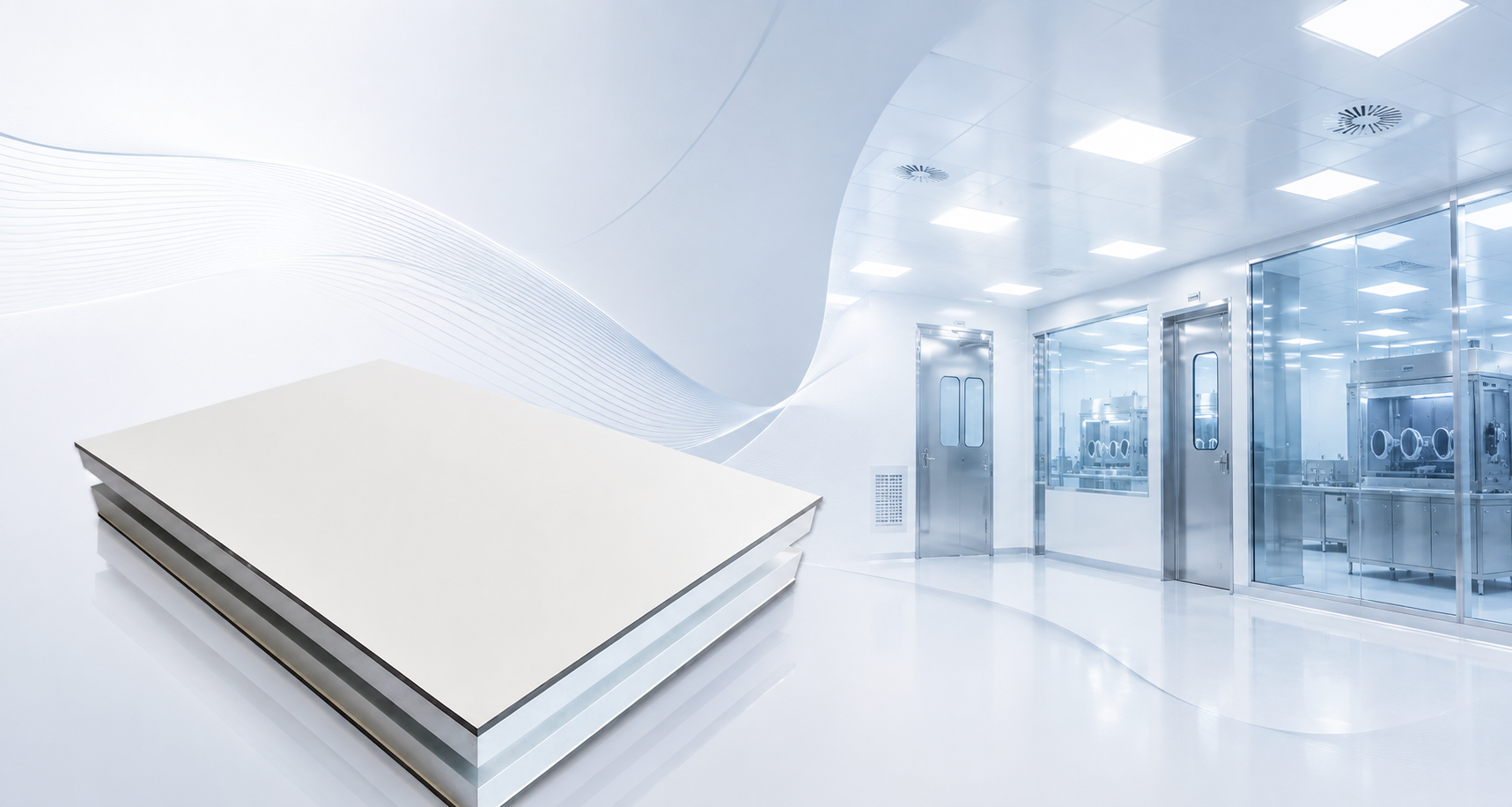
When it comes to constructing a cleanroom, the choice of materials is not merely a construction decision; it is part of designing a contamination control system. Cleanroom walls and ceilings must be designed and installed in a way that enables particle control, cleaning and disinfection, proper sealing, and the maintenance of the environmental conditions required by the process.
One of the most important components of this environment is the cleanroom sandwich panel. These panels are used to create smooth, washable interior surfaces suitable for controlled environments. Along with flooring, doors, windows, ventilation systems, and other cleanroom components, they form part of an integrated system.
Vira Pharmed designs, manufactures, and installs sandwich panels as one of the main components of cleanroom systems in its cleanroom projects. Therefore, the objective is not simply to supply a construction panel, but to provide an implementation solution tailored to the application, cleanliness level, and specific requirements of each project.
In this article, we will examine what a cleanroom sandwich panel is, what types are available, how it is selected, how cleanrooms are constructed using sandwich panels, and what factors affect installation costs.
What Is a Cleanroom Sandwich Panel?
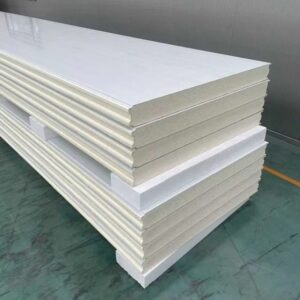
A cleanroom sandwich panel is a multilayer panel used to construct the walls and, in some designs, ceilings of controlled environments such as cleanrooms, laboratories, pharmaceutical facilities, medical equipment manufacturing areas, and other sensitive industries.
The overall structure of these panels consists of two main components:
- Outer layers or facing sheets
- Core or internal insulation layer
Depending on the project requirements, the facing material can be selected from options such as pre-painted steel sheet, galvanized steel, aluminum, or stainless steel. The core material is also selected based on thermal, mechanical, safety, and application requirements.
However, an important point is that a cleanroom panel should not be considered simply an insulated wall.
In a cleanroom, the way panels are connected, the sealing of joints, connections to the floor and ceiling, corner details, installation points for doors and windows, and even utility penetration details can affect the overall performance of the space.
For this reason, the selection and installation of sandwich panels should be considered an integral part of the cleanroom design process.
Why Are Sandwich Panels Used in Cleanroom Construction?
In conventional construction methods, the presence of joints, cracks, gaps, and non-washable surfaces can make it difficult to maintain a controlled environment.
Cleanroom sandwich panels are designed to address some of these challenges.
The main advantages of using them include:
Smooth and Washable Surface
The interior surfaces of a cleanroom should be as smooth, uniform, and easy to clean as possible. This helps prevent dust and contaminants from accumulating in different areas.
Reduced Contamination Accumulation Points
Proper joint design and appropriate installation details can reduce the number of areas where contaminants may accumulate.
Proper Sealing
Proper panel connections and effective joint sealing play an important role in reducing the infiltration of air, moisture, and contaminants from different parts of the structure.
Insulation
The insulated core of the panel can help control heat transfer and, consequently, maintain the environmental conditions required within the cleanroom.
Fast Installation
Compared with conventional wall construction, the use of panel systems can make the installation of cleanroom walls and ceilings faster and more organized.
Project-Specific Design Capability
Cleanroom sandwich panels can be designed and installed according to the dimensions and height of the space, the location of doors and windows, equipment requirements, and utility routes within the project.
Components of a Cleanroom Sandwich Panel
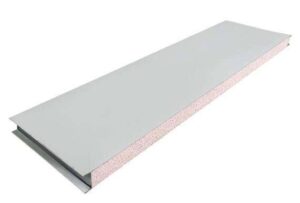
A sandwich panel used in a cleanroom typically consists of a multilayer structure.
1. Outer Layer
The outer layer of the panel is responsible for providing a durable, smooth, and easy-to-clean surface.
The facing material may vary depending on the project conditions. The following factors should be considered when selecting the facing:
- Humidity level
- Type of cleaning agents and disinfectants
- Corrosion conditions
- Traffic and usage intensity
- Hygiene requirements
- Required cleanliness level
- Project budget
2. Insulated Core
In addition to providing the structural core of the panel, the internal insulation layer affects its thermal performance and, in some types, its fire and acoustic performance.
The appropriate core should be selected based on the actual project specifications. No single insulation type can be considered the best option for all cleanrooms.
3. Panel Joint and Connection System
The connection between panels is one of the most important aspects of cleanroom construction.
The joints between panels must be designed and sealed in a way that keeps the interior surface as seamless, cleanable, and suitable for operating conditions as possible.
Types of Cleanroom Sandwich Panels
The selection of a cleanroom panel should be based on the application and project requirements. Therefore, a panel cannot be considered suitable for all projects based solely on its price or thickness.
Some of the factors affecting selection include:
- Type of industry
- Required cleanroom classification
- Temperature and humidity conditions
- Cleaning and disinfection requirements
- Chemicals used in the environment
- Fire-resistance requirements
- Mechanical and impact conditions
- Building structure type
- Utility installation requirements
Sandwich Panels with Galvanized or Pre-Painted Steel Facings
This type of panel is widely used in industrial projects and controlled environments and, depending on the coating type, can accommodate various operating conditions.
Sandwich Panels with Aluminum Facings
In some projects, aluminum facings are selected due to the properties of aluminum.
Sandwich Panels with Stainless Steel Facings
In environments where corrosion resistance, frequent washing, and stringent hygiene requirements are particularly important, stainless steel can be a suitable facing option.
The choice among these options should be based on the project specifications rather than simply on the material name.
Which Industries Use Cleanroom Sandwich Panels?
The application of cleanroom sandwich panels is not limited to a single industry.
These systems are used in the design and construction of various controlled environments, including:
Pharmaceutical Industry
In the production of pharmaceuticals, raw materials, vaccines, and other sensitive processes, contamination control is highly important. Pharmaceutical cleanrooms should be designed according to the manufacturing process and its specific requirements.
Medical Device Manufacturing
Production and assembly environments for medical devices may also require controlled environments.
Laboratories
Depending on their activities, research, diagnostic, and industrial laboratories may use cleanroom panel systems.
Food Industry
In certain food production, processing, and packaging processes, environmental contamination control is particularly important.
Electronics Industry
The manufacturing of sensitive electronic components and certain precision equipment requires control of particles and environ
Stages of Cleanroom Construction Using Sandwich Panels
Cleanroom construction using sandwich panels is not limited to installing a few panels on a structural framework.
A properly executed project begins at the design stage and continues through testing and final handover.
Stage One: Assessing the Project Application and Requirements
The first step is to determine the process for which the cleanroom is being designed.
For example, the requirements of a pharmaceutical production area are not the same as those of a research laboratory or an electronic equipment assembly area.
At this stage, the following factors are evaluated:
- Space application
- Dimensions
- Cleanroom classification
- Number of personnel
- Equipment
- Temperature
- Humidity
- Pressure
- Cleaning requirements
- Production process
Stage Two: Cleanroom Design
Once the requirements have been established, the project drawings and layout are prepared.
The design should define the location of elements such as:
- Walls
- Ceiling
- Doors
- Windows
- Equipment
- Utility routes
- Air diffusers
- Flooring
- Access points
Stage Three: Site Preparation
Before the panels are installed, the project site must be prepared for the system installation.
Level surfaces, a properly prepared structural framework, defined connection points, and coordination with utility systems are among the key considerations at this stage.
Stage Four: Installation of Wall Sandwich Panels
The wall panels are installed at the designated locations according to the project drawings.
At this stage, careful attention to vertical alignment, leveling, panel connections, and corner details is particularly important.
Stage Five: Ceiling Installation
After the walls have been installed, or according to the project-specific design system, the ceiling panels are installed and secured.
The ceiling installation method must be coord
What Should You Consider When Selecting a Cleanroom Sandwich Panel?
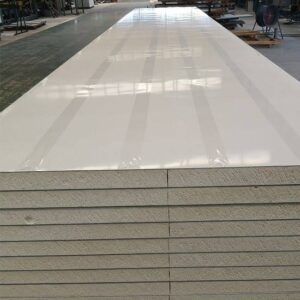
Selecting the right panel cannot be based solely on comparing thickness and price.
Before making a selection, at least the following factors should be evaluated:
1. Cleanroom Application
First, determine what process will be carried out inside the cleanroom.
2. Cleanroom Classification
The required cleanliness level affects the design of many cleanroom components.
3. Cleaning and Disinfection Requirements
If the environment is subject to frequent cleaning or disinfection, the surface’s resistance to the cleaning agents and disinfectants used becomes particularly important.
4. Chemical Resistance
In laboratories and pharmaceutical industries, various substances may come into contact with interior surfaces.
5. Fire Resistance
The type of activity and the project’s safety requirements should be taken into account when selecting the panel core and overall panel structure.
6. Connection Details
Even the highest-quality panel cannot deliver the expected performance if it is improperly installed.
For this reason, the quality of cleanroom panel installation is just as important as the specifications of the panel itself.
How Is the Price of Cleanroom Sandwich Panels Calculated?
One of the common questions asked by project owners is: How much does a cleanroom sandwich panel cost?
However, in cleanroom projects, providing a fixed price per square meter without evaluating the project can be misleading.
The final cost depends on various factors, including:
- Total cleanroom area
- Room height
- Panel type
- Panel thickness
- Facing material
- Insulation core type
- Number and type of doors
- Number of windows
- Corner details
- Ceiling type
- Structural conditions
- Required level of sealing
- Utility routes
- Project site conditions
- Required cleanliness level
- Other cleanroom equipment and components
Therefore, if your goal is to construct a cleanroom, it is better to evaluate the complete project specifications rather than requesting a price for an individual panel separately.
Vira Pharmed recommends the appropriate cleanroom design and construction solution based on the project information, intended application, and technical requirements.
What Is the Difference Between Purchasing Panels and Cleanroom Construction?
This distinction is highly important for project owners.
A sandwich panel is only one component of a cleanroom.
Even if a high-quality panel is selected, the cleanroom may experience performance issues if:
- The joints are not properly sealed,
- The flooring is not properly coordinated with the walls,
- The doors are not properly installed,
- Utility routes pass through the panels without proper consideration of sealing requirements,
- The HVAC system is not properly coordinated with the space design.
For this reason, in critical projects, selecting a cleanroom contractor capable of coordinating the various project components is more important than purchasing an individual material separately.
Why Should Cleanroom Construction Be Carried Out as an Integrated Process?
A cleanroom is a system of interdependent components.
Walls, ceilings, flooring, doors, windows, ventilation systems, filtration, pressure control, sealing, and operating procedures must all be considered together.
For example, if sandwich panels are used for the walls but cable or pipe penetrations are installed without proper consideration of sealing requirements, the integrity of the enclosure system will be compromised.
Therefore, cleanroom construction requires coordination among the different components and disciplines of the project.
Vira Pharmed: Cleanroom Manufacturing and Construction
Vira Pharmed is not simply a sandwich panel supplier.
The company carries out cleanroom manufacturing and construction based on project requirements and selects and installs the sandwich panels used in each project according to the specific requirements of the space.
With this approach, the objective is not simply to build walls, but to create a controlled environment with coordinated construction details.
The following aspects may be evaluated as part of the project implementation:
- Cleanroom design and layout
- Cleanroom sandwich panels
- Cleanroom walls and ceilings
- Antistatic PVC flooring
- Cleanroom doors
- Cleanroom windows
- Sealing and joint treatment
- Coordination with the ventilation and HVAC systems
- Interior construction details
- Preparation for project testing and handover
This approach helps project owners move forward with the project as an integrated whole rather than coordinating multiple contractors for different components.
Is the Same Sandwich Panel Suitable for All Cleanrooms?
No.
The type of panel should be selected based on the application, environmental conditions, cleanliness level, cleaning requirements, chemical resistance, fire safety requirements, and project specifications.
Therefore, the answer to the question, “What is the best cleanroom sandwich panel?” does not have a single fixed answer.
The best panel is the one selected according to the actual requirements of the project and properly installed.
Can a Cleanroom Sandwich Panel Alone Create a Cleanroom?
No.
A sandwich panel is an important part of the physical structure of a cleanroom, but a cleanroom consists of much more than walls and ceilings.
Cleanroom performance depends on a combination of factors, including:
- Ventilation system
- Filtration
- Pressure control
- Temperature and humidity control
- Flooring
- Walls and ceiling
- Doors and windows
- Sealing
- Cleaning procedures
- Personnel practices
- Production processes
Therefore, the selection of a cleanroom panel should be carried out as part of the overall cleanroom design.
Frequently Asked Questions About Cleanroom Sandwich Panels
What Is a Cleanroom Sandwich Panel?
A cleanroom sandwich panel is a multilayer panel system used to construct the walls and ceilings of controlled environments. It is selected and installed according to project requirements in terms of surface characteristics, insulation, cleanability, and sealing.
Which Industries Use Cleanroom Sandwich Panels?
These panels are used in projects such as pharmaceutical manufacturing, medical device manufacturing, laboratories, food processing, electronics, biotechnology, and certain healthcare and research facilities.
What Factors Affect the Price of Cleanroom Sandwich Panels?
The type and thickness of the panel, facing material, insulation core, area, height, number of doors and windows, construction details, site conditions, and other cleanroom components all affect the final cost.
Does Vira Pharmed Sell Sandwich Panels Separately?
No. In Vira Pharmed projects, sandwich panels are used as part of the cleanroom design and construction system, with the company focusing on project implementation and providing a complete cleanroom solution.
What Are the Stages of Cleanroom Construction Using Sandwich Panels?
The process typically includes assessing project requirements, design, site preparation, installation of walls and ceilings, sealing of joints, installation of doors and windows, coordination with flooring and utilities, and finally, project inspection and handover.
Can the Same Type of Sandwich Panel Be Selected for Every Project?
No. Panel selection should be based on the application, cleanliness classification, environmental conditions, cleaning requirements, chemical resistance, fire safety requirements, and other project specifications.
Conclusion
A cleanroom sandwich panel is one of the most important physical components of a cleanroom, but its actual performance is determined when it is used together with the other cleanroom components and installed through proper design and construction.
The panel type, facing material and insulation core, connection method, joint sealing, corner details, and coordination with the flooring, doors, windows, and ventilation system all affect the final quality of the project.
Therefore, if you are planning to construct a cleanroom for a pharmaceutical, medical, laboratory, electronics, or industrial project, it is better to evaluate the entire project from the design stage through construction rather than purchasing an individual material separately.
Vira Pharmed, with its integrated approach to cleanroom manufacturing and construction, uses cleanroom sandwich panels according to project requirements as part of the overall cleanroom system and coordinates the implementation of different components with the goal of creating an integrated system.
If you are looking for cleanroom design, manufacturing, and construction for your project, share your project specifications, area, and intended application with Vira Pharmed specialists so that the appropriate solution for your space can be evaluated.


