


Cleanroom Validation: Stages, Tests, Standards, and Requirements
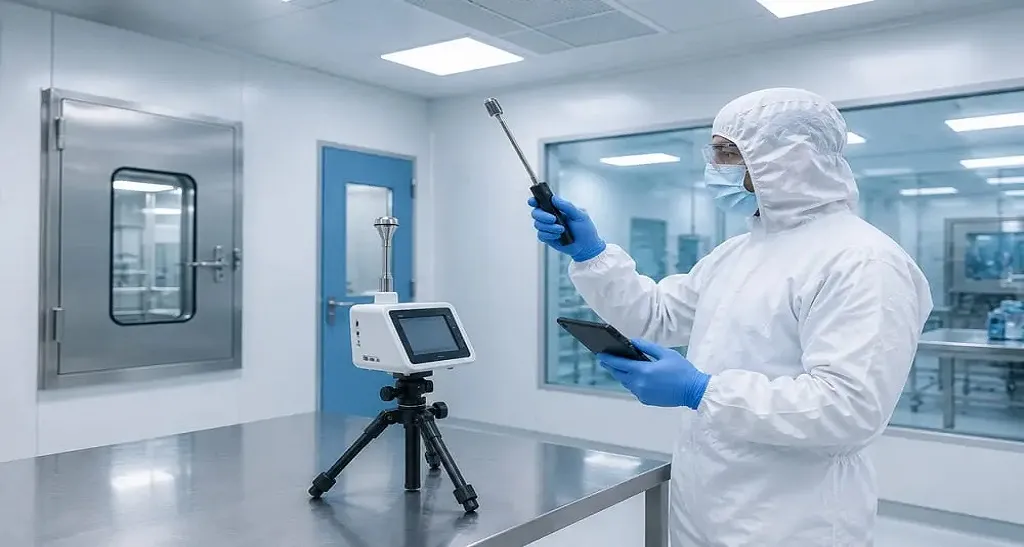
Cleanroom validation is a series of inspections, tests, and documentation activities performed to ensure that a cleanroom operates correctly and complies with specified standards. In pharmaceutical, medical device, food, laboratory, and other sensitive industries, contamination control is extremely important. Airborne particles, microbial contamination, pressure fluctuations, or improper HVAC system performance can affect product quality and the safety of manufacturing processes.
For this reason, simply constructing a cleanroom with suitable filters and advanced equipment is not enough. The actual performance of the environment must be evaluated under different conditions, and reliable documentation must demonstrate that the cleanroom can consistently maintain the required conditions.
This article explains cleanroom validation, its implementation stages, relevant standards, essential tests, and required documentation.
What Is Cleanroom Validation?
Cleanroom Validation is a systematic process of demonstrating and documenting that a cleanroom, its equipment, and associated systems operate according to their design requirements and can maintain the required environmental conditions.
During this process, parameters such as airborne particle concentration, differential pressure, air velocity and airflow patterns, HEPA filter performance, temperature, humidity, and, when necessary, the microbiological conditions of the environment are evaluated.
The main objectives of cleanroom validation are to confirm that:
- The room’s cleanliness class complies with the specified requirements.
- The ventilation and filtration systems operate properly.
- Differential pressure between different areas is maintained correctly.
- Airflow controls contamination and carries it away from the environment.
- Environmental conditions are suitable for the intended process.
- The cleanroom performs acceptably and reproducibly under operating conditions.
It is important to note that validation is not limited to a single test. It involves a combination of technical activities, implementation procedures, and documentation that must be planned according to the industry, risk level, and project requirements.
The Difference Between Cleanroom Validation, Qualification, and Classification
These three terms are sometimes used interchangeably, but they do not have the same technical meaning.
Validation: The overall process of demonstrating and documenting that a system or process can consistently produce the expected results.
Qualification: A set of activities demonstrating that facilities, equipment, and systems have been properly designed, installed, and commissioned, and that they perform acceptably. The DQ, IQ, OQ, and PQ stages generally fall within this framework.
Classification: The determination of an air cleanliness class based on the concentration of airborne particles of specified sizes. This classification is generally performed according to ISO 14644-1.
Therefore, classification is an important part of cleanroom assessment, but it does not, by itself, mean that validation has been completed.
Important Standards for Cleanroom Validation
Proper validation must be performed according to recognized standards and the requirements applicable to the relevant industry. The most important standards include the following.
ISO 14644
The ISO 14644 series is one of the main references for the design, classification, testing, and control of cleanrooms. Its important parts include:
- ISO 14644-1: Classification of air cleanliness based on airborne particle concentration.
- ISO 14644-2: Requirements for monitoring and providing evidence of ongoing cleanroom performance.
- ISO 14644-3: Test methods for cleanroom performance, such as filter and airflow testing.
- ISO 14644-4: Requirements for cleanroom design, construction, and start-up.
- ISO 14644-5: Requirements for cleanroom operations.
- ISO 14644-12: Monitoring of nanoparticle concentrations.
EU GMP Annex 1
EU GMP Annex 1 specifies the requirements for the manufacture of sterile medicinal products and is particularly important in pharmaceutical projects.
This document addresses topics such as room classification, HVAC system design, contamination control, environmental monitoring, qualification, and risk management.
In pharmaceutical projects, Annex 1 requirements must be considered in accordance with the product type, manufacturing process, and level of contamination risk.
The Main Stages of Cleanroom Validation
Cleanroom validation is generally planned around design, installation, performance, and operation. The commonly used framework includes DQ, IQ, OQ, and PQ.
1. Design Qualification (DQ)
During Design Qualification (DQ), the cleanroom design is reviewed to ensure that it meets the project’s needs and technical requirements.
The main items assessed at this stage include:
- Required cleanliness class for each area
- Room layout and personnel or material movement routes
- Number and location of HEPA filters
- HVAC system capacity and design
- Required differential pressure between rooms
- Surface materials and finishes
- Contamination control and cleaning requirements
The purpose of DQ is to identify potential design problems before construction begins.
Proper cleanroom design is the foundation of successful validation. Before construction starts, the cleanliness class, room layout, movement routes, and ventilation system specifications must be determined correctly. For more information about the design requirements and preparation of a cleanroom, see our guide to cleanroom design and construction.
2. Installation Qualification (IQ)
During Installation Qualification (IQ), the cleanroom equipment and components are inspected to confirm that they have been installed in accordance with the approved drawings and technical specifications.
The main activities at this stage include:
- Inspecting HEPA filter installation
- Checking the specifications of the air handling unit and ventilation equipment
- Inspecting ductwork and connections
- Checking sensors and measuring instruments
- Inspecting pressure gauges and transmitters
- Verifying the specifications of installed materials and equipment
- Reviewing technical documents and calibration certificates
At the end of this stage, there should be documented evidence that the main system components have been installed correctly.
3. Operational Qualification (OQ)
During Operational Qualification (OQ), the performance of systems is evaluated under defined operating conditions.
For example, the assessment determines whether the ventilation system can supply the required air volume, whether the filters perform properly, and whether differential pressure between rooms remains within the specified range.
Tests at this stage may include particle counting, filter leak testing, airflow assessment, pressure measurement, temperature and humidity monitoring, and alarm testing.
4. Performance Qualification (PQ)
During Performance Qualification (PQ), the cleanroom is assessed to determine whether it can meet the specified requirements under actual or simulated operating conditions.
Factors such as personnel presence, equipment operation, door opening and closing, and the execution of work processes may affect the evaluation of environmental performance.
The purpose of PQ is to confirm that the cleanroom can maintain controlled conditions not only when it is inactive, but also during normal operation.
Different Cleanroom Testing States
Cleanroom test results must be interpreted according to the environmental state at the time of measurement. The three common states are:
- As-Built: The cleanroom has been completed and the equipment installed, but operational equipment and personnel are not present in operating conditions.
- At-Rest: The equipment has been installed and the system is ready for operation, but routine production activities and personnel are not present.
- Operational: The cleanroom is performing its defined activities, with personnel and equipment present in accordance with operating conditions.
These states make it possible to evaluate environmental performance under different conditions and determine how personnel and equipment activities affect room cleanliness.
The Most Important Cleanroom Validation Tests
Validation tests are selected according to the cleanroom type, cleanliness class, intended use, and applicable standards. Not every project necessarily requires every test.
1. Particle Count Test
In this test, the concentration of airborne particles is measured using a Particle Counter.
The results are compared with the permitted limits for the required cleanliness class to determine whether the environment complies with its specified classification.
Particle measurements are generally performed at specified sizes, such as 0.5 and 5 microns. However, the required particle sizes depend on the relevant class and standard.
2. HEPA Filter Leak Test
HEPA filters play an important role in removing airborne particles. During the filter integrity test, potential leaks in the filter media, frame, and installation seals are examined.
This test is generally performed using a suitable aerosol and a photometer or other approved equipment.
The purpose of the test is to ensure that air does not bypass the filter through leakage paths and that the filter can maintain its expected performance.
3. Air Velocity and Airflow Pattern Test
During this test, air velocity and airflow patterns are measured at different points throughout the cleanroom. In areas with unidirectional airflow, maintaining uniformity and the correct airflow direction is particularly important. In non-unidirectional airflow systems, air distribution must also be designed to prevent stagnant areas and contamination accumulation.
One of the factors affecting airflow quality is the proper performance of the ventilation system. The air handling unit must be capable of supplying filtered air to the required area at the appropriate volume and conditions. To learn more about the components and operation of this equipment, read our article on Hygienic Air Handling Units for Cleanrooms.
4. Differential Pressure Test
Differential pressure between adjacent rooms is important for controlling airflow direction and reducing the risk of contamination transfer.
In cleanroom environments, higher pressure is generally maintained in cleaner areas compared with less-clean areas. However, in environments requiring containment of hazardous materials, negative pressure may be necessary.
Therefore, the direction and magnitude of differential pressure must be determined according to the system design and risk assessment.
In addition to the ventilation system, control equipment also plays a role in managing pressure and movement between different areas. For example, an interlock system helps maintain environmental control by preventing connected doors from opening simultaneously. For more information, see our article What Is a Cleanroom Interlock System?.
5. Air Changes per Hour (ACH) Test
ACH, or Air Changes per Hour, indicates the volume of air supplied or exchanged in one hour relative to the room’s volume.
This is an important parameter for evaluating ventilation system performance. However, ACH alone cannot demonstrate cleanroom air quality. The cleanliness class and actual environmental performance must be assessed through relevant tests.
6. Temperature and Humidity Test
Environmental temperature and relative humidity can affect product quality, personnel working conditions, and the performance of sensitive processes.
During this test, temperature and humidity values are measured at specified locations and compared with the limits defined in the design or project documentation.
7. Particle Recovery Test
The Recovery Test determines how long a cleanroom takes to return to the required cleanliness level after a controlled increase in airborne particle concentration.
This test is used to evaluate the ventilation system’s ability to reduce airborne particle contamination.
8. Airflow Visualization Test (Smoke Study)
During a Smoke Study, smoke or another suitable visible substance is used to examine airflow paths.
This test helps identify stagnant areas, undesirable airflow patterns, potential air reversal, and the movement of contamination.
In sterile pharmaceutical environments, airflow visualization is particularly important because the airflow must protect the product and critical areas from contamination.
9. Microbiological Tests
In some cleanrooms, particularly pharmaceutical environments and sterile product manufacturing facilities, microbiological monitoring is also part of the environmental assessment and control program.
Common methods include:
- Active air sampling
- Surface sampling
- Settle plate monitoring
- Microbial contamination assessment at specified locations
The results must be interpreted according to industry requirements, the type of activity, and the environmental monitoring program.
The Difference Between ISO Classes and Pharmaceutical Grades in Cleanrooms
Understanding the difference between ISO classification and pharmaceutical grades is an important part of cleanroom design and validation.
ISO classification is based on airborne particle concentration. In contrast, Grades A, B, C, and D in sterile pharmaceutical manufacturing provide a framework for defining environmental control levels according to GMP requirements.
| Classification | Application |
|---|---|
| ISO Class 5 | Environments requiring a very high level of particle control |
| ISO Class 6 | Clean environments with tighter particle limits than less stringent classes |
| ISO Class 7 | Clean areas required for many sensitive processes |
| ISO Class 8 | Clean environments with a lower level of control than the preceding classes |
| Grade A | Critical zone for high-risk sterile manufacturing operations |
| Grade B | Background environment for certain Grade A operations |
| Grade C | Areas with environmental control appropriate to specified manufacturing stages |
| Grade D | Areas with a level of control appropriate to defined activities |
It is important to note that pharmaceutical grades cannot be considered directly equivalent to specific ISO classes without taking the relevant conditions and requirements into account. In addition, particle limits may differ between At-Rest and Operational states.
Understanding the characteristics of different cleanroom classes is essential for interpreting environmental requirements. For example, in pharmaceutical Grade D areas, environmental conditions must be controlled according to the type of activity and manufacturing requirements. Read our article on Grade D Cleanroom: Standards, Design, and Construction Costs to learn more about the standards and characteristics of this class.
What Factors Affect Cleanroom Validation Results?
Validation results do not depend solely on the installed equipment. Various factors can affect cleanroom performance, including:
- Improper HVAC system design
- Incorrect air handling unit capacity selection
- Improper installation of HEPA filters
- Leakage in ducts or connections
- Incorrect positioning of supply and return air outlets
- Excessive personnel movement
- Failure to follow cleanroom gowning and behavioral procedures
- Improper surface cleaning
- Frequent opening and closing of doors
- Failure to calibrate measuring instruments
For this reason, the environmental conditions and system readiness should be checked before testing begins to ensure that the results are reliable.
Required Documentation for Cleanroom Validation
Preparing and maintaining documentation is an important part of the validation process. Test results are considered reliable and traceable when the test methods, equipment used, measurement conditions, and results are accurately recorded.
The main required documents include:
- Validation protocol and test plan
- Approved cleanroom drawings
- Technical specifications of equipment and filters
- Installation and commissioning records
- Calibration certificates for measuring instruments
- Particle count test report
- HEPA filter leak test report
- Pressure, temperature, and humidity measurement reports
- Airflow test and Smoke Study reports, where required
- Deviation reports and corrective actions
- Final validation report
The final report must specify which tests were performed, what the results were, and whether the cleanroom meets the defined requirements.
Periodic Monitoring and Cleanroom Revalidation
Cleanroom validation is not a one-time activity. After initial approval, the environment’s performance must continue to be monitored over time.
Periodic monitoring helps identify changes in system performance in a timely manner and prevents more serious problems from developing.
Repeating all or part of the tests may also be necessary under the following circumstances:
- Replacement or repair of HEPA filters
- Major changes to the HVAC system
- Changes to the cleanroom layout or structure
- Changes to the required cleanliness class
- Major maintenance or repairs
- Unacceptable environmental monitoring results
- Changes to the manufacturing process or operating conditions
The frequency of testing and requalification must be determined according to applicable standards, GMP requirements, risk level, and the environment’s performance history.
When Should Cleanroom Validation Be Performed?
Cleanroom validation is generally performed in several key situations:
- After the initial construction and commissioning of a cleanroom
- Before starting operation in new projects
- Following major changes to equipment or the environment’s structure
- After significant repairs to the ventilation and filtration systems
- As part of periodic requalification programs
- When deviations or a decline in environmental performance are observed
Performing tests at the appropriate time helps identify problems before they affect product quality or the manufacturing process.
Conclusion
Cleanroom validation is one of the most important steps in ensuring the quality and performance of cleanrooms in pharmaceutical, medical, food, and other sensitive industries. By assessing the design, installation, equipment performance, and actual operating conditions, this process determines how well the environment complies with specified requirements.
Proper implementation of the DQ, IQ, OQ, and PQ stages, conducting tests such as particle counting, HEPA filter leak testing, differential pressure measurement, and airflow assessment, and preparing reliable documentation all play an important role in achieving a dependable cleanroom.
The key point is that the scope of validation must be determined according to the type of activity, cleanliness class, applicable standards, and project risk assessment. A single validation program is not suitable for every cleanroom.
Frequently Asked Questions About Cleanroom Validation
Can cleanroom validation be performed using a particle count test?
No. Particle counting is one of the important cleanroom tests, but validation may also include other tests, such as HEPA filter leak testing, differential pressure measurement, airflow assessment, temperature and humidity monitoring, and evaluation of system performance under operating conditions.
What are the main stages of cleanroom validation?
The main qualification stages generally include DQ, IQ, OQ, and PQ. These stages evaluate design, installation, operation, and the system’s ability to maintain the required conditions during operation, respectively.
How often should cleanroom validation be performed?
The requalification schedule depends on the industry, applicable standards, risk level, and the environment’s performance history. In sterile pharmaceutical environments, EU GMP Annex 1 requirements must also be considered when determining the frequency of assessments.
Is HEPA testing necessary for all cleanrooms?
In environments that use HEPA filters, checking filter integrity and connections is important. The scope and frequency of testing must be determined according to the system design and applicable standards.
What is the difference between cleanroom validation and classification?
Classification determines the air cleanliness class based on particle concentration. Validation is a broader process that evaluates and documents system performance and compliance with project requirements.
Does cleanroom validation need to be repeated after HEPA filter replacement?
After replacing a filter, relevant tests must be performed, including filter integrity testing and an assessment of the replacement’s impact on system performance. Depending on the extent of the changes, additional tests may also be required.