

Cleanroom Lighting: A Comprehensive Guide to Selection, Types, Standards, and Cleanroom Light Prices
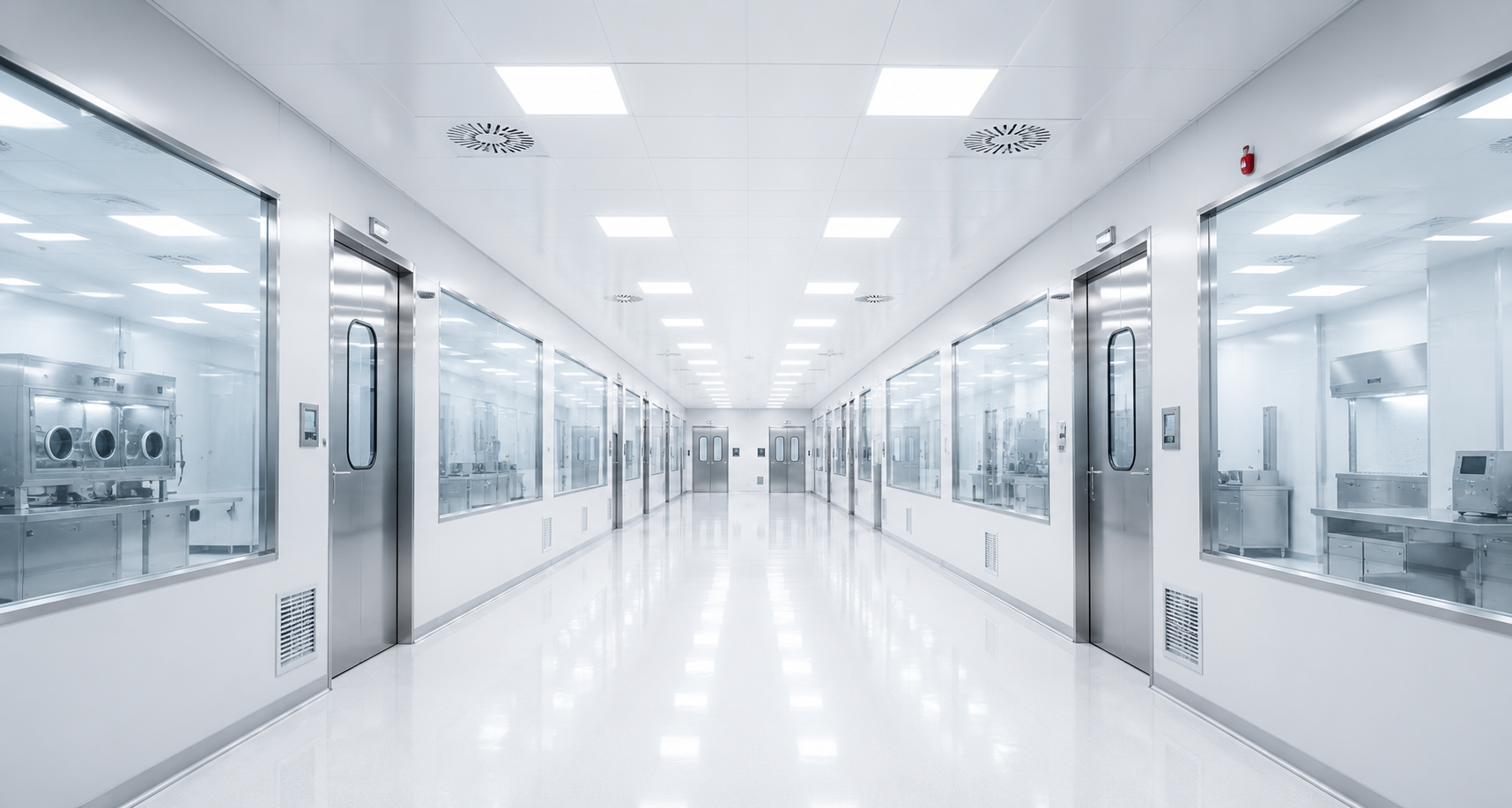
In sensitive environments such as pharmaceutical manufacturing, medical industries, laboratories, and electronic and semiconductor production, even the smallest particles can affect product quality or test results. For this reason, cleanroom lighting is not simply a basic source of illumination; it is an integral part of the contamination control system and the engineered design of a cleanroom. In addition to providing adequate illumination, these lights must be resistant to dust, moisture, disinfectants, and cleaning processes.
Selecting the right cleanroom light improves safety, reduces maintenance costs, enhances working conditions for personnel, and helps maintain compliance with cleanroom standards. In this article, we explore the different types of cleanroom lighting, their technical specifications, key standards, factors affecting cleanroom light prices, and important purchasing considerations.
What Is Cleanroom Lighting and How Does It Differ from Conventional Lighting?
Cleanroom lighting is a specialized lighting system designed for use in environments where airborne particle levels are strictly controlled. Unlike conventional light fixtures, which may have gaps, joints, or surfaces where dust can accumulate, cleanroom lights feature a fully enclosed, sealed, and washable design.
In a cleanroom, equipment must not become a source of secondary contamination. Therefore, cleanroom lighting fixtures typically feature the following characteristics:
- Smooth, seamless surfaces to prevent particle accumulation
- Housing resistant to cleaning agents and disinfectants
- Proper sealing to prevent dust ingress
- Lower heat generation compared with older lighting technologies
- Compatibility with cleanroom ceiling installations without creating potential contamination points
For this reason, using conventional lighting fixtures in sensitive environments can increase the risk of contamination and compromise the controlled conditions of the cleanroom.
Importance of Cleanroom Lighting in Various Industries
Cleanroom lighting is not only intended to provide better visibility for personnel; it also directly affects production process quality, error control, and the maintenance of standard environmental conditions.
Some of the main applications of cleanroom lights include:
| Reason for Using Cleanroom Lights | Industry |
|---|---|
| Preventing contamination from entering pharmaceutical production environments | Pharmaceutical |
| Providing a bright, controllable, and disinfectable environment | Medical and Hospital |
| Preventing particle-related damage to sensitive components | Electronics |
| Precise contamination control during the manufacturing process | Semiconductor |
| Providing adequate illumination for precision work | Laboratories |
| Maintaining hygienic conditions on production lines | Food Industry |
Types of Cleanroom Lights and Their Applications
The choice of lighting type depends on the ceiling structure, cleanroom classification, type of activity, and environmental conditions. The main types of cleanroom lights include the following:
Recessed Cleanroom Ceiling Light
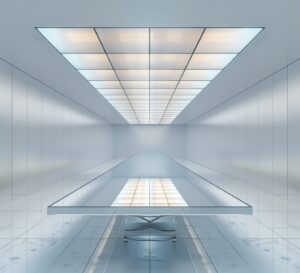
The recessed cleanroom ceiling light is one of the most common options for sensitive environments such as pharmaceutical facilities and laboratories. This type of light is installed within the ceiling, creating a completely flush and integrated surface.
Advantages of Recessed Cleanroom Lights:
- Reduced dust accumulation points
- A seamless appearance with the ceiling
- Suitable for environments with stringent hygiene requirements
- Compatible with ceiling filters and ventilation systems
- Easy to clean
This type is typically used in cleanrooms where particle control is of high importance.
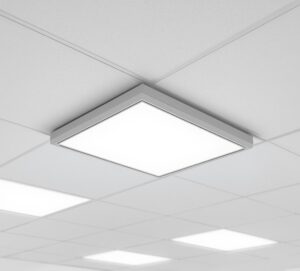
Surface-Mounted Cleanroom Lights
Surface-mounted lights are used when recessed installation is not possible or when easier access for maintenance and repairs is required.
Advantages of This Type:
- Faster installation
- Lower installation costs
- Easier maintenance and replacement
- Suitable for renovating older cleanrooms
These lights are commonly used in environments such as food processing facilities, controlled-storage areas, and certain industrial production lines.
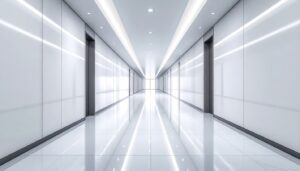
Linear Cleanroom Lights
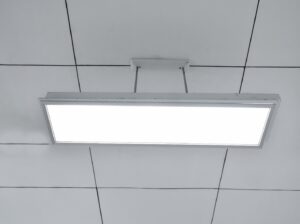
Linear cleanroom lights are designed for spaces that require uniform illumination along production lines or throughout elongated areas.
Common Applications:
- Sensitive assembly lines
- Electronics industry
- Research laboratories
- Long production halls
The main advantage of this type is its ability to minimize dark spots and provide uniform light distribution.
- Magnetic Cleanroom LightsMagnetic lights are one of the newer solutions for cleanroom lighting. This type can be installed without extensive ceiling cutouts and is a suitable option for environments where minimizing particle ingress is important.
Features of Magnetic Cleanroom Lights:
- Easy installation
- Reduced impact on the ceiling structure
- Quick maintenance and replacement
- Reduced risk of contamination entering the environment during installation
UV Cleanroom Lights
UV lights use ultraviolet radiation and are used in certain specialized environments to help control microbial contamination.
An important point is that UV lighting is not a substitute for the primary lighting system and must be used with safe design and in accordance with specialized guidelines.
Important Standards for Selecting Cleanroom Lighting
The selection of dust-resistant cleanroom lighting should be based on technical specifications. Some of the most important parameters include:
IP Protection Rating
In many cleanroom applications, lighting fixtures must provide adequate resistance to particle and moisture ingress.
For example:
| Description | Standard |
|---|---|
| Protection against a specified level of dust and water splashes | IP54 |
| High resistance to dust and water splashes | IP65 |
| Greater resistance to water and harsher conditions | IP66 |
Selecting the appropriate IP rating depends on the cleaning and washing process, environmental humidity, and industrial requirements.
Cleanroom Lighting Level and Lux
Illumination is typically measured in lux (Lux). The required lighting level depends on the type of activity.
For example:
- General activities: Require moderate illumination.
- Precision laboratory work or assembly of sensitive components: Requires higher and controlled illumination.
Lighting should be designed to provide sufficient illumination without causing glare.
Color Rendering Index (CRI)
CRI indicates how accurately the colors
Guide to Choosing the Best Cleanroom Light
Before purchasing cleanroom lighting, it is recommended to evaluate the following factors:
- Type of industry and application
- Required cleanroom classification
- Cleanroom ceiling type
- Required illumination level
- Cleaning and disinfection conditions
- Environmental humidity level
- Possibility of maintenance without entering the cleanroom
- Quality of the LED driver and LED chip
Choosing the wrong lighting fixture can increase maintenance costs and reduce cleanroom performance.
Comparison of Cleanroom Light Types
| Level of Contamination Control | Best Application | Main Advantage | Light Type |
|---|---|---|---|
| Very high | Pharmaceutical and medical industries | Completely flush surface | Recessed |
| Medium to high | Food and industrial industries | Easy installation | Surface-mounted |
| High | Production lines | Uniform illumination | Linear |
| High | Environments requiring easy maintenance | Installation without damaging the ceiling | Magnetic |
| Design-dependent | Specialized microbial control | Supports disinfection | UV |
Frequently Asked Questions About Cleanroom Lights
How Do Cleanroom Lights Differ from Conventional Lights?
Cleanroom lights feature a sealed design, smooth surfaces, easy-clean construction, and greater resistance to particles and disinfectants.
What Is the Best Type of Light for a Cleanroom?
The best choice depends on the industry and environmental conditions. However, recessed or magnetic LED lights are commonly used in many sensitive environments.
Are LED Lights Suitable for Cleanrooms?
Yes. Due to their low energy consumption, lower heat generation, and long service life, LED lights are among the most widely used lighting options for cleanrooms.
What IP Rating Should a Cleanroom Light Have?
The appropriate IP rating varies depending on the environmental conditions. However, models rated IP65 or higher are commonly used in many industrial applications.
How Much Do Cleanroom Lights Cost?
The price depends on factors such as light type, dimensions, power rating, housing material, protection rating, and component quality.
Does the Color of the Walls and Ceiling Affect Cleanroom Lighting?
Yes. Light-colored surfaces, such as white, provide better light reflection and can improve the efficiency of the lighting


